
Guerric Haché hat The Shadow Gospel von Whitney Phillips besprochen
Compelling and Thought-Provoking
5 Sterne
If you've ever thought that right-wing politics is weirdly incoherent and seems more concerned with picking fights and being cruel than with actually having a consistent set of principles, this book is for you.
If you've ever wondered why right-wing ideology and talking points seem to dominate public conversation so thoroughly outside of small progressive bubbles, this is also for you.
Frankly, it's an interesting read for almost anyone interested in American political discourse, even if only begrudgingly.
The book seeks to understand the motivating force of right-wing ideology in the US, and suggests that it's not really an ideology - it's not a collection of ideas about politics. Instead, it's a demonology - a collection of demons that have to be fought and killed, whether that's librarians or queer people or Anglicans or people who eat organic food or Republicans who don't like Trump. There are …
If you've ever thought that right-wing politics is weirdly incoherent and seems more concerned with picking fights and being cruel than with actually having a consistent set of principles, this book is for you.
If you've ever wondered why right-wing ideology and talking points seem to dominate public conversation so thoroughly outside of small progressive bubbles, this is also for you.
Frankly, it's an interesting read for almost anyone interested in American political discourse, even if only begrudgingly.
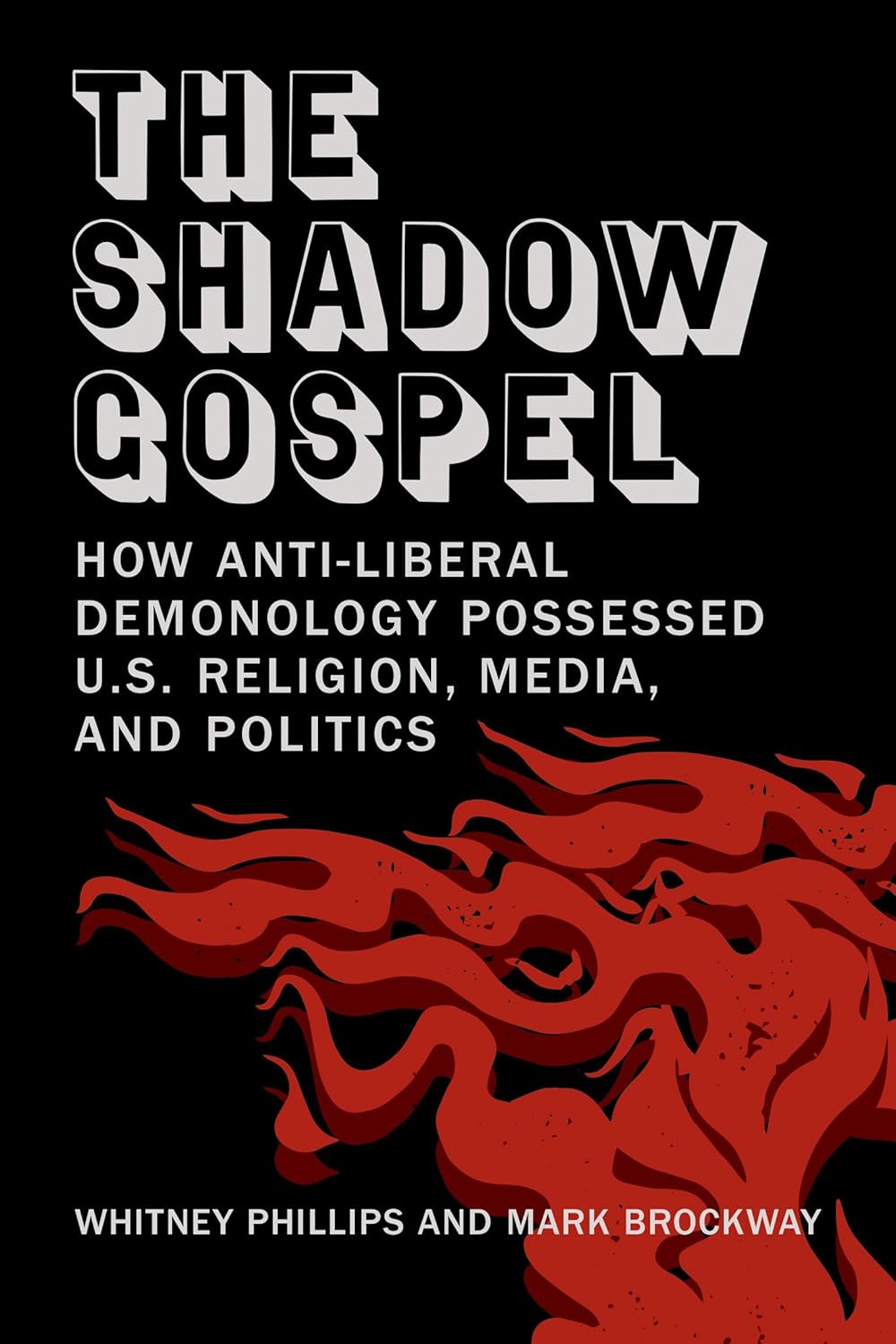
The book seeks to understand the motivating force of right-wing ideology in the US, and suggests that it's not really an ideology - it's not a collection of ideas about politics. Instead, it's a demonology - a collection of demons that have to be fought and killed, whether that's librarians or queer people or Anglicans or people who eat organic food or Republicans who don't like Trump. There are no actual ideas for policy, no guiding beliefs, no principles outside the urge to fight these demons.
In the process of developing this idea, the authors chart a course through the history of US conservativism from the 1950s onward. This acts as a overview of the slow blending and sharpening of various right-wing movements over time, but also a fascinating analysis of the structure of conservative influence networks. That historical analysis offers insights into how the right came to dominate anglophone North American media in the way it did.
I say North American because sadly, and increasingly since the rise of social media and since Stephen Harper did his damage, anglophone Canadian media has increasingly been subsumed into American media. I think this has allowed the shadow gospel to spread more rapidly into Canada as well. I think our political environment maps a bit awkwardly to the shadow gospel, but I think it does lead to certain narratives we've started to see about Canadian politics.
Anyway, this is a very interesting read, and if the authors are onto something, it's also a very concerning thesis. How are we supposed to fight the shadow gospel? The authors offer some very crude sketches of where to go, but overall that question is much more work to answer. I hope they try to answer it in some way.
It would also be interesting to see them analyse the evolving narrative landscape of "the left," though I suspect part of the problem is that there isn't really a coherent left in the same way.