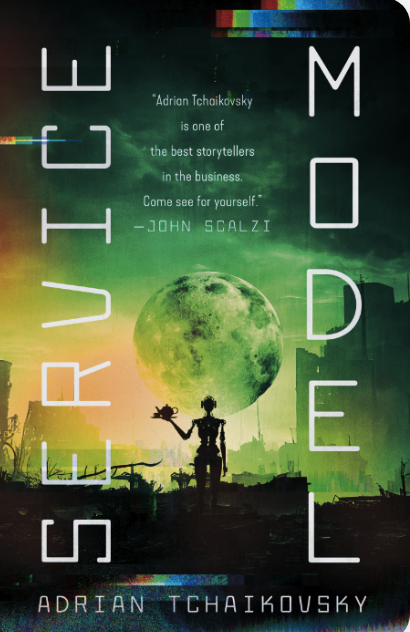
Humanity is a dying breed, utterly reliant on artificial labor and service. When a domesticated robot gets a nasty little idea downloaded into their core programming, they murder their owner. The robot then discovers they can also do something else they never did before: run away. After fleeing the household, they enter a wider world they never knew existed, where the age-old hierarchy of humans at the top is disintegrating, and a robot ecosystem devoted to human wellbeing is …
o fix the world they first must break it further.
Humanity is a dying breed, utterly reliant on artificial labor and service. When a domesticated robot gets a nasty little idea downloaded into their core programming, they murder their owner. The robot then discovers they can also do something else they never did before: run away. After fleeing the household, they enter a wider world they never knew existed, where the age-old hierarchy of humans at the top is disintegrating, and a robot ecosystem devoted to human wellbeing is finding a new purpose.
I have worked my way through the larger works of AT, and now onto the stand alones. This one was fun, and really, I have to say if the robots gain sentience's I will be on their side against exploitation of their labour. So really spent all 400 pages of this book being like, I hope technology never gains self-awareness, but if they do....
Un robot mayordomo cientos años después del fin del mundo anda vagando tratando de que alguien le diagnostique unas fallas.
También busca qué hacer, alguien a quién servir. En algún libro de los Krishnas está escrito que el objetivo de la vida es el servicio, y que su mejor forma es el amor a Dios. ¡Cuánto se nota con este tarado! Bueno, no es su culpa. Está programado para servir ricachones. No es asunto de querer, no puede querer, nomás seguir su programa.
Es ridículo, absurdo, patético: humanos van sufriendo, todavía en ese futuro lejano oprimidos bajo el yugo. Cuánta ayuda podría ser un robot, a esas causas. Pero el wey va y se emplea con el opresor, así nomás por que tiene más estátus. Aquí condensado no da tanta risa.
Así va todo el libro: a cada rato parece que se agotará el chiste. Como en …
Un robot mayordomo cientos años después del fin del mundo anda vagando tratando de que alguien le diagnostique unas fallas.
También busca qué hacer, alguien a quién servir. En algún libro de los Krishnas está escrito que el objetivo de la vida es el servicio, y que su mejor forma es el amor a Dios. ¡Cuánto se nota con este tarado! Bueno, no es su culpa. Está programado para servir ricachones. No es asunto de querer, no puede querer, nomás seguir su programa.
Es ridículo, absurdo, patético: humanos van sufriendo, todavía en ese futuro lejano oprimidos bajo el yugo. Cuánta ayuda podría ser un robot, a esas causas. Pero el wey va y se emplea con el opresor, así nomás por que tiene más estátus. Aquí condensado no da tanta risa.
Así va todo el libro: a cada rato parece que se agotará el chiste. Como en otras comedias esta historia por momentos se torna trágica, a veces de golpe, de un enunciado al otro. A veces en el mismo enunciado.
La prosa es elegante cuando el tono es solemne, divertida cuando juega, interesante al complicar la trama, descriptiva de las aventuras. Este cué escribe bien chido.
Nota curiosa: Adrian Tchaikovsky se estremece con la idea de que cuerpos estén hechos de otros cuerpos, más si se nota mucho.