What does it mean to be stylish without being showy, alluring without being crude, detached without being cold?
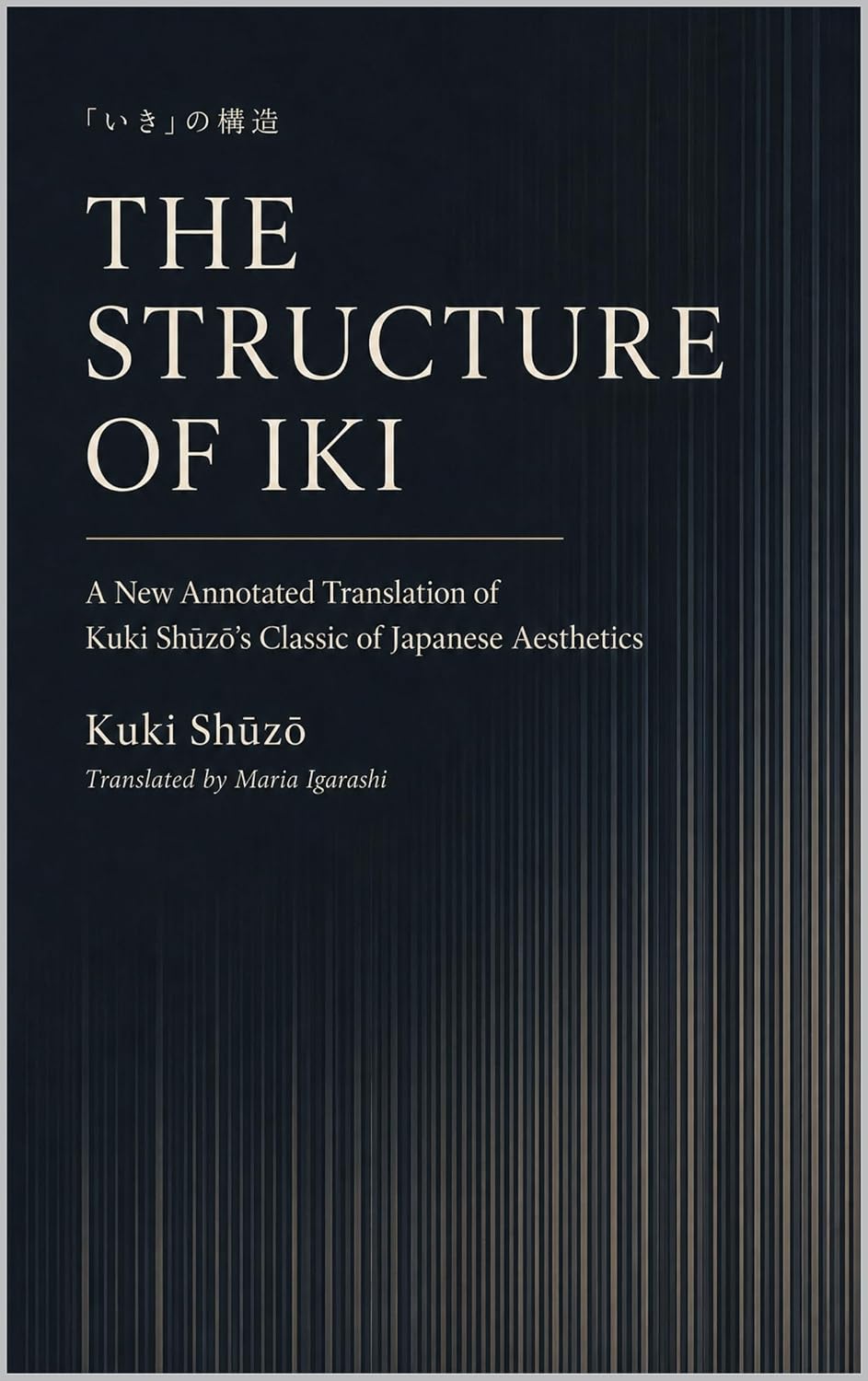
In The Structure of Iki, Japanese philosopher Kuki Shūzō offers one of the most subtle and original accounts of aesthetic life in modern thought. First published in 1930, this compact classic examines iki: the urbane Edo ideal of refined coquetry, spirited pride, and lucid resignation. Neither mere elegance nor simple beauty, iki names a way of inhabiting tension — between desire and restraint, display and concealment, attachment and freedom.
Drawing on the world of Edo pleasure quarters, kabuki, geisha culture, clothing, color, architecture, music, and everyday gesture, Kuki treats style not as ornament but as a form of being. A sidelong glance, a muted stripe, a loosened collar, a restrained voice: each may disclose a whole philosophy of distance, possibility, and poise.
This new annotated translation by Maria Igarashi presents Kuki’s influential work in clear contemporary English, with notes, a glossary, selected bibliography, and a substantial afterword that situates the text in relation to Japanese aesthetics, phenomenology, Edo culture, translation, and the problem of national aesthetics.
For readers of In Praise of Shadows, The Book of Tea, wabi-sabi, phenomenology, and the philosophy of style, The Structure of Iki offers a concise but profound meditation on beauty, desire, and the art of not exhausting what one loves.