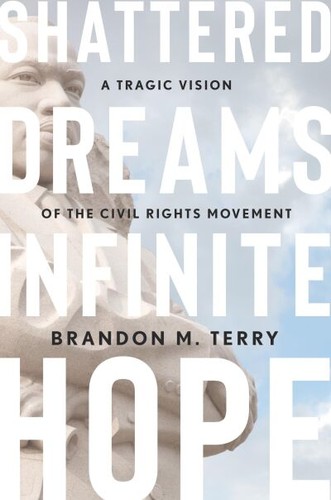

Ben Waber hat Shattered Dreams, Infinite Hope von Brandon M. Terry besprochen
An Urgent, Challenging Read
5 Sterne
This book, when at its best, is arguably the most important work of historically-inflected philosophy of the 21st century. In those sections, which is most of the book, Terry brilliantly dissects narratives and simplistic analyses of the Civil Rights movement, demonstrating how they fail to confront that history in its context and grapple with its revolutionary, imperfect philosophy and goals. He later reconnects these pieces in a concluding chapter that is nearly indescribable in its insightful, painful, moving, and hopeful analysis and call to action.
This is contrasted with chapters that are essentially digressions on inside baseball 21st century philosophy arguments, including an entire chapter on Kant (!) with barely any connective tissue to the Civil Rights era, and another one on Arendt with the same issue. If this were a textbook for a philosophy class these reviews would make sense, but that and later sections that referee arguments …
This book, when at its best, is arguably the most important work of historically-inflected philosophy of the 21st century. In those sections, which is most of the book, Terry brilliantly dissects narratives and simplistic analyses of the Civil Rights movement, demonstrating how they fail to confront that history in its context and grapple with its revolutionary, imperfect philosophy and goals. He later reconnects these pieces in a concluding chapter that is nearly indescribable in its insightful, painful, moving, and hopeful analysis and call to action.
This is contrasted with chapters that are essentially digressions on inside baseball 21st century philosophy arguments, including an entire chapter on Kant (!) with barely any connective tissue to the Civil Rights era, and another one on Arendt with the same issue. If this were a textbook for a philosophy class these reviews would make sense, but that and later sections that referee arguments between philosophers that have had at best a very limited influence on society's understanding and interpretation of the Civil Rights movement should only be read if you're interested in those topics. Otherwise you should probably just skip these parts (they're easy to spot) and focus on the rest of this important text. Highly recommend